


I’ve been using AI for coding in various ways for just over a year now, and honestly? The evolution has been astonishing. The tools and processes transform at a pace I’ve never seen in any other industry – what felt experimental last month becomes standard practice today.
My journey started with simple curiosity: “Can this actually write functional code?” That led to building personal projects like bodocs.co.za, my document-automation side project. Yet for months, I remained deeply skeptical about AI handling production-ready work. Like many, I experimented with “vibe coding” – feeding prompts into tools like lovable.dev and accepting outputs without scrutiny. While fun for weekend experiments, this approach has limitations that become painfully clear when building real products.
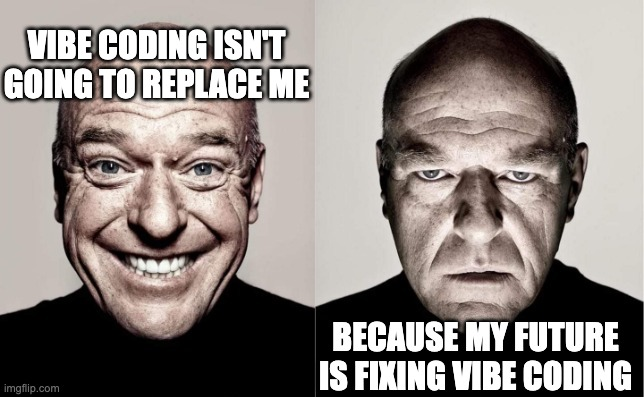
I’ve noticed people react differently when I mention building products with AI. Many assume it’s all “vibe coding” – magical prompts without craftsmanship. This misconception reveals how many haven’t yet embraced the AI revolution, missing opportunities while the landscape accelerates around them.
The Reality Check for Vibe Coders
Vibe coding hits a wall because it overlooks the fundamental anatomy of real-world applications. Modern software isn’t a standalone script – it’s an ecosystem of interconnected services. Consider an app like Airbnb: it integrates authentication providers like Auth0 or Firebase, payment processors like Stripe, geolocation APIs like Mapbox, cloud storage solutions like AWS S3, and deployment pipelines through platforms like Vercel.
Each component requires careful configuration, security hardening, and ongoing maintenance. Vibe coders might generate a clean UI component, but they’ll struggle connecting it to Stripe’s webhook system or implementing OAuth flows correctly. The deployment process alone – whether submitting to app stores requiring privacy manifests and security reviews, or configuring cloud infrastructure – involves hundreds of decisions AI can’t fully automate without human oversight.
The Engineer’s Advantage
This complexity is where technical builders thrive. When you understand how systems integrate, you gain three critical advantages: First, you can direct AI with surgical precision (“Generate a Next.js API route that validates Stripe signatures using this encryption key”). Second, you spot risks early – like recognizing when AI-generated authentication code lacks brute-force protection. Third, you select truly production-ready tools, choosing managed databases like Supabase over experimental solutions.
When building Bodocs, I used AI to generate entire features – but only because I knew exactly what to request. Implementing user file storage? That meant understanding S3 bucket policies, CORS configurations, and signed URL security. AI wrote the boilerplate, but I architected the system.
From Prototype to Production
The true power emerges when combining AI with engineering discipline: Tools like Codium.ai automatically generate test suites for AI-written code. GPT-4 reviews pull requests, flagging security vulnerabilities like unparameterized SQL queries. Platforms like GitHub Actions can deploy entire infrastructures through AI-generated CI/CD scripts.
This isn’t just about speed – it’s about intelligent acceleration. I’ve moved from prototypes to revenue-generating features in weeks, not months. But crucially, this workflow doesn’t replace engineers; it amplifies their impact.
Finding the Balance
While “build an app in a weekend!” makes catchy headlines, scaling without technical depth risks catastrophic failures. Successful teams – whether technical founders shipping MVPs solo, product engineers automating drudge work, or coding designers prototyping with tools like Figma + Locofy – understand AI is a powerful lever, not a magic wand.
They maintain the crucial balance between development speed, product quality, and operational cost that vibe coders often miss.
The Real Question
The difference between AI-assisted development and AI-dependent vibe coding isn’t subtle. One creates impressive demos; the other builds applications that handle real users, process payments, and evolve sustainably.
So I’m curious: Are you vibe coding, or are you engineering with AI?